How Blocked Gutters Lead to Damp Walls
You probably don't give your gutters a second thought until a dark, spreading patch turns up on an upstairs wall. By the time you notice it inside, water has usually been getting in for weeks, sometimes months, quietly soaking into the stone and brick every time it rains.
Here in Durham, where the wet comes off the Wear valley and hangs about for days, a blocked gutter has plenty of chances to do damage. Most people assume damp walls are a plumbing fault or rising damp from the ground. Very often the real culprit is sitting six feet above your head, clogged with moss and leaves and overflowing every time the sky opens.
The quick answer: When gutters block, rainwater spills over the edge and runs straight down your walls, and that constant soaking works its way through to the inside as damp patches, peeling paint, and a musty smell.
1. How a Blocked Gutter Actually Overflows
A gutter has one job, which is to catch the water running off your roof and carry it to the downpipe. When moss, leaf litter, and grit build up in the channel, that water has nowhere to go. It backs up, fills the gutter to the brim, and then tips over the front lip in a sheet.
On the older stone terraces around Gilesgate and the red-brick streets near the city centre, the gutters are often the original cast iron or a narrow uPVC replacement that fills fast. Add the moss that Durham roofs grow so freely, and it doesn't take much rain before the whole run is overflowing rather than draining.
2. Where the Water Goes Once It Spills
Water that pours over a gutter edge doesn't drift away politely. It runs straight down the wall below, following the render, the pointing, and any little ledge it can find. Every downpour sends another wash of water over the same stretch, so one blocked section tends to soak one patch of wall again and again.
The stone and brick that Durham homes are built from will hold that moisture like a sponge. In a former pit village such as Belmont or out toward Framwellgate Moor, plenty of houses have solid walls with no cavity, so once water gets into the outer face it has a clear path through to the plaster inside.
3. The Link Between Overflow and Damp Walls
Damp on an internal wall almost always traces back to water getting in from outside. When a gutter overflows in the same spot for months, the wall never fully dries out, especially through a North East winter when there's barely a dry day to help it along. The moisture creeps inward until it reaches the plaster and shows as a stain.
You'll often see it start high up, near the ceiling or the top corner of a room, because that's closest to the leaking gutter. Peeling wallpaper, blistered paint, and a cold, musty smell are the usual first signs. Left alone, the damp feeds mould and can start to rot skirting boards and window reveals.
4. Why Durham Weather Makes It Worse
Durham sits in a cool, damp corner of the country, and the rain that rolls in off the Pennines and up the Wear valley keeps roofs and walls wet for long stretches. That damp air is exactly what moss loves, so gutters here clog faster than they would in a drier part of England.
Winter piles on the pressure. When an overflowing gutter freezes, the ice expands and can crack the joints or push the whole run out of line, so even after a thaw the water keeps spilling in the wrong place. By the time spring arrives, a wall near Neville's Cross that's been soaked all season can be properly saturated.
5. Signs Your Gutters Are Behind the Problem
The clearest tell is watching what happens during heavy rain. If you see water sheeting over the front of the gutter or running down the wall in a curtain rather than gushing out of the downpipe, the channel is blocked somewhere above.
Between showers, look for green streaks or a dark tide mark on the wall directly under a gutter joint. Plants sprouting out of the gutter, sagging sections, and grit or moss washed onto the path below all point the same way. Match a stubborn indoor damp patch to a gutter fault right above it and you've usually found your answer.
6. How Regular Gutter Cleaning Breaks the Cycle
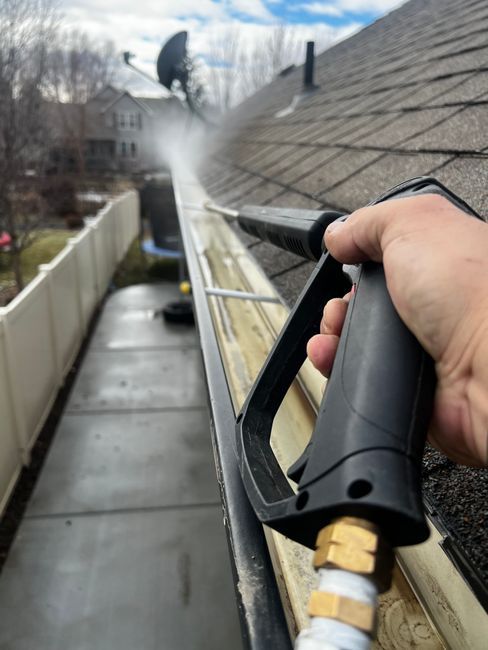
Clearing the gutters so water actually reaches the downpipe is the single most effective thing you can do to stop this kind of damp. Once the channel runs free, the wall below gets a chance to dry out, and the staining inside can settle rather than spreading further.
For most Durham homes a clear-out once or twice a year does the job, timed for after the autumn leaves come down and again after winter. If your roof grows a lot of moss, pairing gutter cleaning with a proper roof clean keeps debris from washing straight back down and refilling the channel a few weeks later.
- Overflow point: Blocked gutters tip water over the front edge, straight onto the wall below rather than into the downpipe.
- Solid walls: Many older Durham houses have no cavity, so outer-face soaking passes through to the inside plaster.
- Weather factor: Long wet spells and winter freezing keep walls saturated and worsen the damage.
- Early signs: High-up stains, peeling paint, and a musty smell usually appear before anything else.
- The fix: Regular gutter clearing, ideally alongside moss removal, keeps water where it belongs.
Frequently Asked Questions
Can a blocked gutter really cause damp inside my house?
Yes, very commonly. Overflowing water soaks the outside wall, and with solid stone or brick it works through to the plaster inside, showing as damp patches and peeling paint.
How can I tell if it's the gutter and not rising damp?
Gutter damp usually appears high on the wall, near the ceiling, while rising damp starts low near the floor. If the stain sits directly under a gutter joint that overflows in the rain, the gutter is the likely cause.
How often should Durham gutters be cleaned?
Once or twice a year suits most homes here. Autumn after the leaves fall is the key one, with a second clear after winter if your roof sheds a lot of moss.
Will cleaning the gutter fix the damp straight away?
It stops fresh water getting in, which is the first step. The wall then needs time to dry out, and any existing internal damage may still need drying and redecorating.
Do you clean roofs and gutters together?
Yes. Clearing moss off the roof stops it washing down and refilling the gutters, so doing both together tends to keep things clear for longer.
Worried a blocked gutter is soaking your walls?
Ben's Roof Cleaning clears gutters and removes moss across Durham and County Durham, with over 15 years of experience. Get in touch or call 07889 127153
for a free, no-obligation quote.
Sort the Gutter and You Sort the Wall
Damp walls are miserable to live with and expensive to put right once they take hold, yet the cause is often something as simple as a gutter full of moss. Keep the water running where it should, and you spare your walls the slow soaking that leads to stains, mould, and rot. A clear gutter really is the cheapest damp-proofing your Durham home can have.