Giving Your Roof a Spring Check After Winter
After a long, wet Durham winter, your roof has taken more of a beating than you'd think. Months of driving rain, hard frosts, and the odd gale coming off the Pennines all leave their mark, and much of the damage sits up there unnoticed until spring.
That first stretch of drier, brighter weather is the ideal moment to take stock. A quick spring check lets you catch the small problems winter left behind, a slipped slate here, a clogged gutter there, before the next round of wet weather turns them into a leak or a damp wall. It's a habit worth building, and it saves a lot of bother later in the year.
The quick answer: Give your roof a proper look each spring for slipped or cracked tiles, moss build-up, and gutter damage, so you can fix the small stuff before it becomes a costly repair.

1. Why Winter Is So Hard on a Roof
Winter attacks a roof in a few different ways at once. Rain and wind work at any loose tile or weak spot, while the freeze-thaw cycle does the quiet damage: water gets into a hairline crack, freezes, expands, and makes that crack a little bigger every cold night. By spring, a tile that was sound in October might be split.
Durham gets the full northern version of this, with plenty of frosts and long damp spells that never really let the roof dry. On the older slate roofs across the city and out in the pit villages, that repeated freezing is exactly what loosens slates and opens up gaps along the ridge and around the chimney.
2. Looking for Slipped and Cracked Tiles
Start from the ground with a good look up, ideally from across the street where you can see the whole slope. You're looking for tiles or slates that have slipped out of line, gaps where one has gone missing, and any that look cracked or lifted. A pair of binoculars makes this a lot easier and keeps you off a ladder.
Pay attention to the lower edges and the valleys where two slopes meet, since that's where slipped tiles tend to gather and where water pools. On a Durham terrace, also cast an eye along the shared ridge line, as a cracked ridge tile up there can let water straight into the roof space.
3. Checking the Gutters and Downpipes
Winter fills gutters with the last of the autumn debris plus whatever moss has washed down in the rain, and freezing can crack or pull sections loose. Watch what happens in a spring shower: water should gush out of the downpipe, not sheet over the front edge or dribble from a joint.
Look for sagging runs, gaps where a joint has come apart, and green streaks on the wall below that show where water has been overflowing. Getting the gutters cleared and flowing now, before spring showers and summer storms, keeps water off your walls through the rest of the year.

4. Dealing With Winter Moss Growth
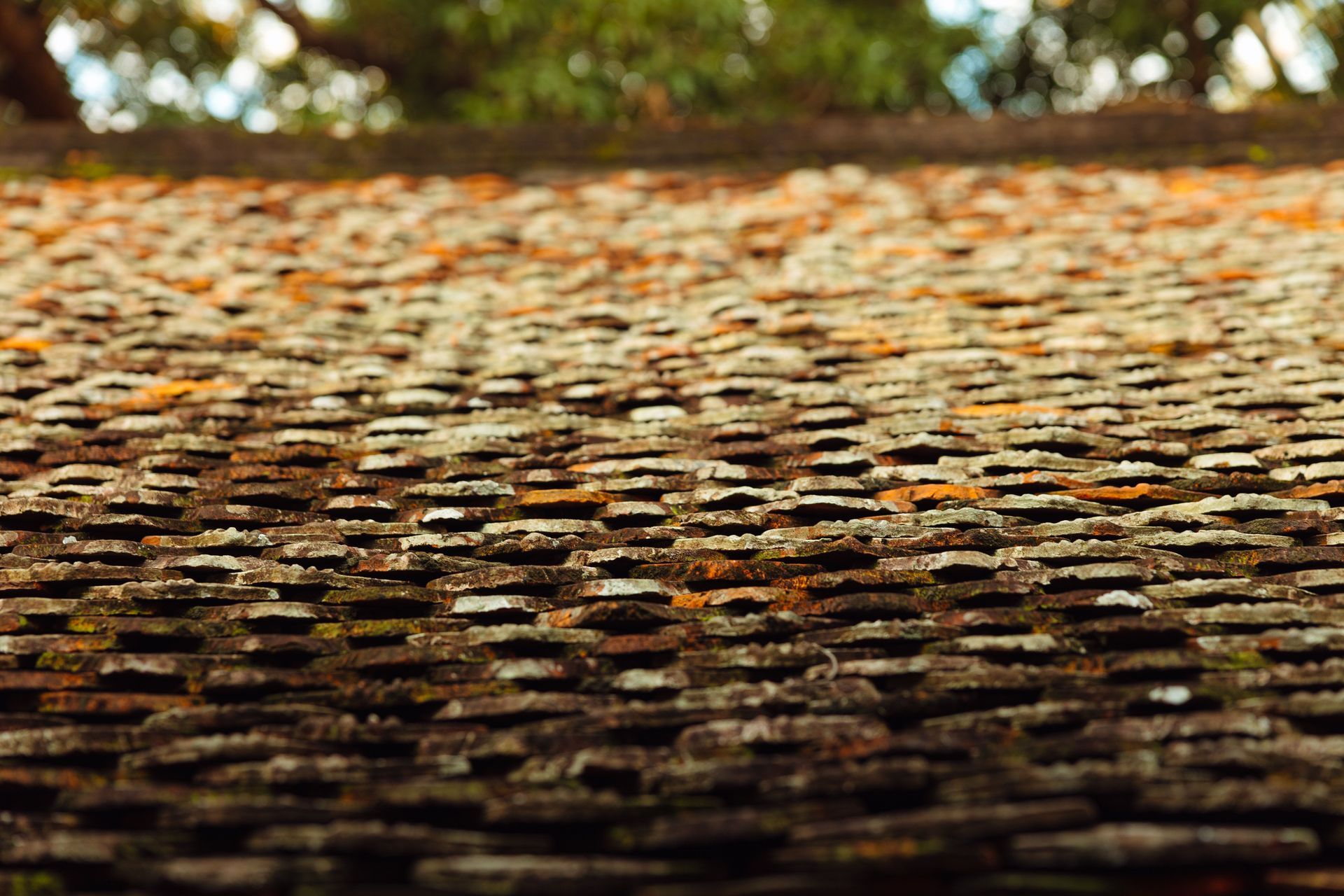
Moss does a lot of its growing over the damp winter months, so spring is often when you first notice just how much has taken hold. Those green cushions look harmless, but they hold water against the tiles and shed debris straight into the gutters, keeping the whole roof damp long after the rain stops.
Durham's climate makes this a near-constant battle, especially on shaded, north-facing slopes. Spring is a good time to clear heavy moss and follow up with a treatment, so the roof goes into the drier months clean rather than carrying a wet green layer into summer and beyond.
5. Signs Water Got In Over Winter
Some winter damage shows up inside rather than out. Head up into the loft on a bright day and look for daylight coming through where it shouldn't, along with damp patches on the timbers, water stains on the felt, or a musty smell that says moisture has been getting in.
Downstairs, check the tops of upstairs walls and ceilings for fresh stains or blistered paint that weren't there in autumn. Catching a small leak now, while it's just a mark, is far cheaper than waiting until it's spread across a ceiling or rotted a roof timber on a solid-walled County Durham home.
6. When to Call Someone In
Plenty of the spring check you can do yourself from the ground with a careful eye. What you shouldn't do is start climbing about on a wet, mossy roof to fix what you find, since that's how people come to grief, particularly on the steeper pitches and taller terraces around Durham.
If your check turns up slipped slates, heavy moss, or gutter damage, that's the point to get someone with the right access equipment to sort it safely. A professional can also spot the things that are easy to miss from the pavement, and deal with the roof and gutters in one go before the busy weather returns.
- Freeze damage: Winter's freeze-thaw cycle splits tiles and loosens slates, so spring is when it shows.
- Ground-level look: Check from across the street with binoculars for slipped, missing, or cracked tiles.
- Gutter test: Watch a spring shower to see if water runs out cleanly or overflows the edge.
- Winter moss: Growth peaks over the damp months, so clear and treat it before summer.
- Leave the climbing: Fixing what you find on a wet, mossy roof is a job for someone with proper access kit.
Frequently Asked Questions
When should I check my roof after winter?
Early spring, once the worst of the frosts have passed and you get a few drier, brighter days. That's when winter damage is visible and there's still time to fix it before wetter weather returns.
What am I looking for in a spring roof check?
Slipped, missing, or cracked tiles, heavy moss growth, and gutter damage or overflow. Inside, check the loft and upstairs ceilings for damp patches or daylight coming through.
Can I do the check myself?
The looking part, yes, mostly from the ground with binoculars. The fixing part is safer left to someone with proper access equipment, especially on a wet or steep roof.
Why does moss seem worse in spring?
Moss grows most over the damp winter, so spring is when you notice how much has built up. Clearing and treating it then keeps the roof clean through the drier months.
Is a small leak really worth sorting straight away?
Yes. A minor leak is cheap to fix while it's just a stain, but left alone it can rot timbers and spread across ceilings, which turns into a much bigger job.
Roof come through winter looking worse for wear?
Ben's Roof Cleaning cleans roofs and clears gutters across Durham and County Durham, with over 15 years of experience. Get in touch or call 07889 127153
for a free, no-obligation quote.
A Spring Look That Saves a Summer Headache
Ten minutes with a pair of binoculars each spring is one of the cheapest bits of home care going. You catch the slipped slate before it lets water in, the blocked gutter before it soaks a wall, and the moss before it smothers the roof. Get ahead of it now, and your Durham roof carries you comfortably through to next winter.