Cleaning Moss Off a Flat or Low-Pitch Roof
If your flat or low-pitch roof has slowly turned green over the last couple of winters, you're not imagining it and you're not alone. Shallow roofs hold water and stay in shade far longer than a steep pitched roof, and around Durham that damp, slow-drying surface is exactly what moss and algae want. You'll usually spot it first on a garage roof, a kitchen extension, or a dormer that never seems to fully dry out.
The trouble is that a flat roof hides its problems better than a pitched one. You can't see it from the pavement, so the moss builds up quietly until water starts sitting in green puddles or a damp patch appears on the ceiling below. By then the covering has often been working harder than it should for a while. This guide walks through why it happens on low roofs specifically, what the moss actually does to the surface, and how to get it off without wrecking the covering in the process.
The quick answer: A flat or low-pitch roof is cleaned with a gentle soft wash, not a pressure washer, because low-pressure water and a biocide treatment lift moss and kill the spores without splitting the felt, membrane, or seams that keep the roof watertight.
1. Why low roofs collect moss in the first place
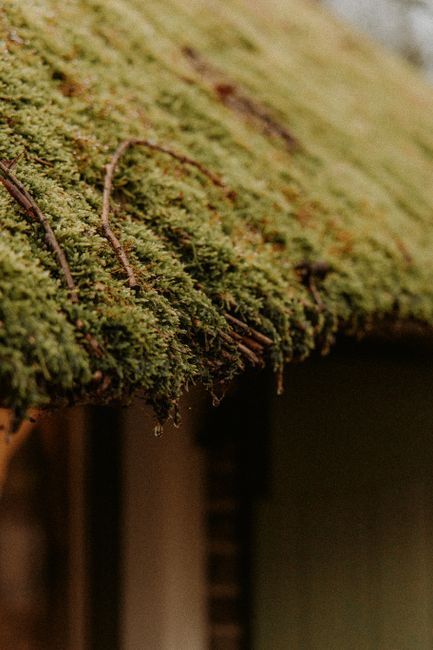
Water is the whole story. A steep roof sheds rain in seconds, but a flat or low-pitch roof lets it linger, and a surface that stays wet is a surface moss can colonise. Add the damp air that rolls up the Wear valley and the long grey spells Durham gets from autumn through to spring, and you've got near-perfect growing conditions for months on end.
Shade makes it worse. A lot of these roofs sit low behind taller houses or under the mature trees you find across Gilesgate and Neville's Cross, so the sun barely touches them. Leaf litter drops onto the surface, breaks down into a thin layer of muck, and gives moss spores somewhere to root. Once that mat takes hold it acts like a sponge and keeps the covering wetter still.
2. The damage moss does when water cannot drain away
On a pitched roof moss is mostly a surface nuisance. On a flat roof it's more serious, because a thick green mat dams up the little bit of fall the roof relies on to drain. Water pools behind it, and standing water is the enemy of every flat roof covering, whether that's old felt, a rubber membrane, or a fibreglass finish.
That trapped moisture works into seams, laps, and around outlets, and in a Durham winter it freezes overnight and thaws by day again and again. That freeze-thaw cycle prises materials apart over time. Plenty of the 1970s and 1980s extensions on estates around Belmont and Framwellgate Moor have flat felt roofs that fail early for exactly this reason, and a mossed-up surface speeds the whole thing along.
3. Why blasting it with a pressure washer is a mistake
It's tempting to point a pressure washer at a green flat roof and watch it come clean in minutes. Please don't. High-pressure water finds every seam, lap, and worn patch on a low roof and drives straight underneath, and on felt or a membrane you can lift edges or tear the surface without realising until it leaks.
There's the safety side too. Flat and low-pitch roofs feel walkable, so people climb straight onto them, but a wet mossy surface is slick and the covering may be softer than it looks. A garage or single-storey extension roof over a hard yard is still a real fall. This is a job that pays to approach gently and, for anything you're unsure of, from a proper platform rather than by scrambling up.
4. How a soft wash actually clears a low-pitch roof
Soft washing does the same job without the risk. The surface gets treated with a low-pressure water and biocide mix that soaks into the moss and kills it down to the spore, so instead of scrubbing living growth off a delicate covering, you're letting the treatment do the work chemically. Loose material is cleared gently and the outlets are checked so water can run away freely again.
The other advantage is how long it lasts. Because the biocide keeps working after the visit, the surface stays clear for far longer than a quick physical scrape would give you. On a shaded low roof in a damp spot like the valley floor near the river, that lasting protection matters more than it would on a bright, breezy pitched roof that dries itself out.
5. Clearing the gutters and outlets that feed the problem
A flat roof drains through outlets and into gutters, and those are usually where the real bottleneck sits. If a rainwater outlet is packed with moss and silt, the water has nowhere to go and simply sits on the roof, feeding the very growth you're trying to get rid of. Clearing the roof without clearing its drainage only fixes half the job.
On the older terraces around Durham, low rear extensions often drain into a shared or awkwardly routed gutter that's easy to forget about. Getting those outlets and gutter runs flowing again is part of the same visit, so the surface can actually shed water the way it was built to. A dry roof grows far less moss than a wet one, and it's the drainage that keeps it dry.
6. Keeping a flat roof cleaner through the wet months
Once a low roof is clean, the goal is to slow down how fast it greens up again. Keeping overhanging branches trimmed back helps, because less shade and less leaf litter means less for moss to feed on. Clearing debris off the surface a couple of times a year, especially after autumn leaf fall, stops that thin organic layer building back up.
A periodic biocide treatment keeps the surface hostile to regrowth without anyone needing to climb up and scrub. Given how consistently damp the North East gets, a light maintenance approach beats waiting until the roof is thick with moss again. It's cheaper over time and far kinder to the covering than repeated heavy cleans on a surface that was never meant to take a battering.
- Standing water: The main enemy of any flat roof, and moss makes it worse by damming natural drainage.
- Gentle method: Soft washing lifts moss with low pressure and biocide instead of blasting fragile felt or membrane.
- Drainage first: Blocked outlets and gutters keep the surface wet and feed regrowth, so they get cleared too.
- Shade and leaves: Trees around Gilesgate and Neville's Cross drop litter that helps moss root, so trimming back pays off.
- Little and often: Light maintenance suits the damp North East better than occasional heavy cleans.
Frequently Asked Questions
Can you walk on a flat roof to clean it?
Only with real care, and often it's safer not to. A wet mossy surface is slippery and some coverings are softer than they look, so where possible the work is done from a platform or the edge rather than by loading the middle of the roof.
Will pressure washing ruin my flat roof?
It can, and often does. High-pressure water gets under seams and laps and can tear or lift felt and membranes, which is why a low-pressure soft wash is the safer choice on any flat or low-pitch covering.
How often should a low-pitch roof be cleaned in Durham?
It depends on shade and tree cover, but many damp, shaded roofs benefit from attention every couple of years. A roof under trees near the river will green up faster than one out in the open.
Does moss really cause leaks on a flat roof?
Indirectly, yes. Moss traps water and dams drainage, and that standing water works into seams and freezes in winter, which is what damages the covering and eventually lets water in.
Is a garage or extension roof worth cleaning?
It usually is. These low roofs green up quickly because they sit in shade, and keeping them clear protects the covering and the room or space underneath from damp problems later.
Is your flat or garage roof turning green?
Ben's Roof Cleaning clears moss safely from flat and low-pitch roofs with gentle soft washing across Durham and County Durham, with over 15 years of experience. Get in touch or call 07889 127153
for a free, no-obligation quote.
A clean low roof is a dry low roof
Flat and low-pitch roofs live or die by how well they drain, and moss is the thing that quietly stops them doing it. Clear the growth gently, keep the outlets and gutters flowing, and stay ahead of it with the odd light treatment, and a low roof will shrug off Durham's wet winters for years. Leave it green and holding water, and you're just waiting for the leak. A careful clean now is the cheap end of that choice.